When you purchase through links on our website , we may earn an affiliate delegacy . Here ’s how it work .
A researcher says he has deciphered an ancient , intemperately damaged inscription carved on a 2,600 - year - previous monument in Turkey .
The monument , which is engraved with ikon of lions and sphinxes , is known as Arslan Kaya ( also spelled Aslan Kaya ) , which intend " lion rock " in Turkish . The inscription spell out the name " Materan , " a goddess of the Phrygians , who flourished in what is now Turkey from just about 1200 to 600 B.C. They cognize her " simply as the Mother,“Mark Munn , a professor of ancient Greek history and archeology at Pennsylvania State University who wrote a composition about the inscription , told Live Science in an email .
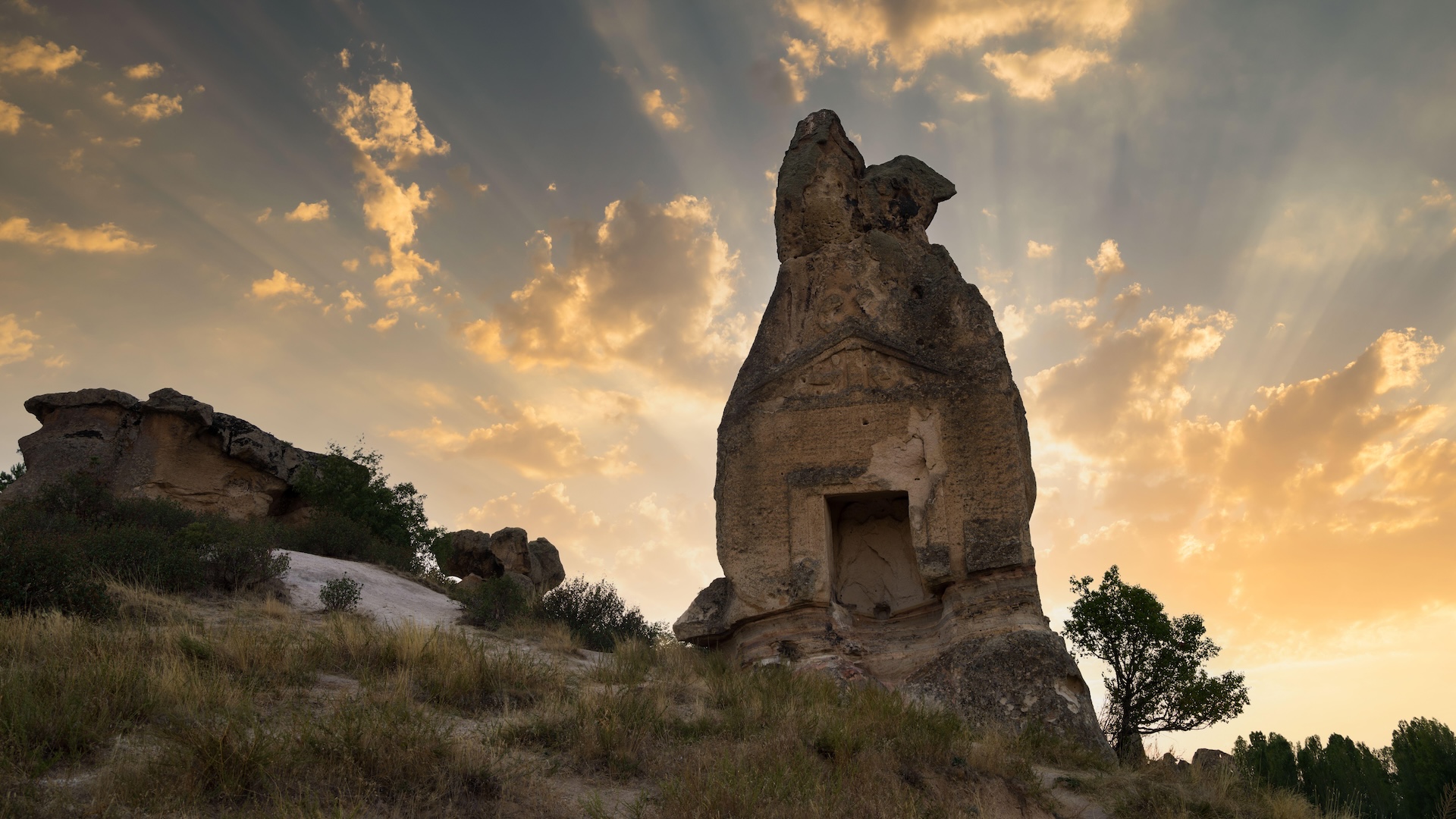
The monument with the ancient inscription is known as Arslan Kaya (also spelled Aslan Kaya), which means “lion rock” in Turkish.
Other ancient cultures also idolise Materan . " The Greeks knew her as the Mother of the Gods , " Munn enunciate , noting that the Romans called her " Magna Mater , " or " expectant Mother . " At the sentence the monument was built , a kingdom known as Lydia , which also had in high spirits regard for Materan , may have rule the area , Munn wrote in his newspaper , which was publish Oct. 24 in the journalKadmos .
The memorial is hard damage from weathering and looters , pee-pee the inscription exceedingly knockout to read . What it says has been a source of debate since the nineteenth one C , Munn take down in the paper . To solve the mystery , Munn photograph the dedication in particular when the twinkle was safe and review honest-to-goodness photographs and records of the dedication .
" Much depend upon the favorability of the light when photographs are taken , " Munn write in the article , observe that the luminousness was specially proficient on the morning of April 25 , 2024 .

relate : Cryptic 4,000 - class - old writing system may finally be deciphered
It makes sense that the monument would bear Materan ’s name , as it also check an image of the goddess , Munn say . Materan ’s name would likely have been part of a larger dedication that explained who commission the inscription and who Materan was .
He also study the monument ’s various stylistic details , which confirm the dedication ’s appointment to the first half or mediate of the sixth century B.C. , Munn spell in the sketch .

— Ancient ' unknown ' book finally decipher 70 year after first being discovered
— stiff of ancient tabernacle with hieroglyphical inscriptions discovered in Sudan
— How do we decipher Egyptian hieroglyphics and other ancient languages ?

However , Rostyslav Oreshko , a reader at the Practical School of Advanced Studies in France who has conducted extensive research on Phrygian inscriptions but was not involved with the research , say the work did n’t pop the question a new interpreting .
" Munn ’s clause in Kadmos does not propose something radically new about the inscription , it merely specify straightforward the indication , " Oreshko told Live Science in an email . " The readingMateran , referring to the well - known Phrygian goddess , was suggested already in the nineteenth century , " Oreshko order , noting that Munn ’s findings patronize that interpretation .
The public debate over the lettering has been going on for over a century and time will recount if it is now at an end .


