When you purchase through links on our internet site , we may earn an affiliate commission . Here ’s how it cultivate .
It ’s related toHIV , yet you ’ve plausibly never heard of it : a virus called human T - cellphone leucaemia virus type 1 , or HTLV-1 .
But now , gamy rates of HTLV-1 in parts of Australia are prompting some scientist to call for increased efforts to prevent the bed cover of the disease , according to intelligence reports .

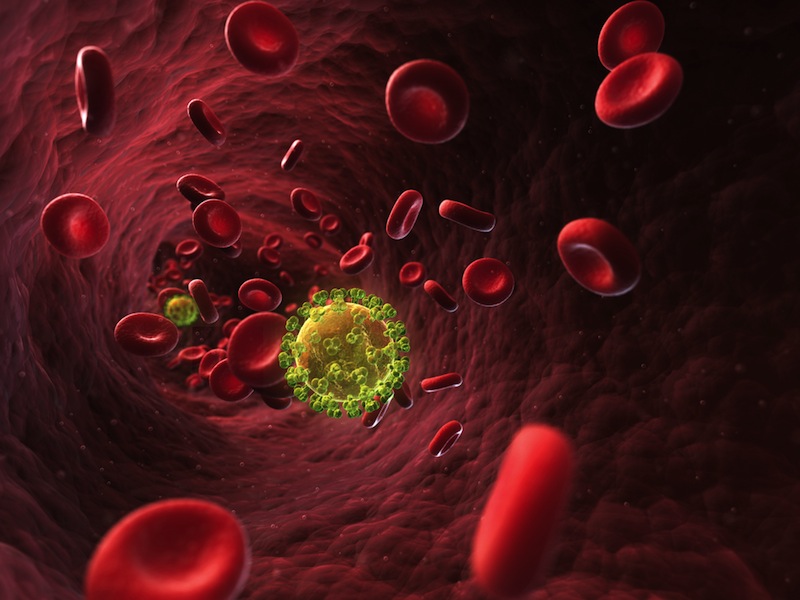
An illustration of human T cell leukemia virus (HTLV).
In remote regions of primal Australia , rates of human T-cell leukemia virus-1 infection outmatch 40 percent among adults , with indigenous biotic community most moved , according to CNN . " The preponderance is off the charts " in Australia , Dr. Robert Gallo , Colorado - founding father and director of the Institute of Human Virology at the University of Maryland School of Medicine , who helped key out HTLV-1 in 1979 , told CNN . Yet there ’s been little research to develop treatments or a vaccine for the disease , Gallo tell . [ 27 Devastating Infectious disease ]
HIV vs. HTLV-1
But what exactly is HTLV-1 , and how is it different from HIV ?
HTLV-1 is a " remote cousin " of HIV that ’s found chiefly in parts of sub - Saharan Africa , Latin America , the Caribbean , Japan and central Australia , according toImperial College London . The virus infects white blood cells known as T cell , and in rare cases , it can do aggressiveleukemia , a cancer of white blood cells , according to the National Institutes of Health’sGenetic and Rare Diseases Information Center ( GARD ) . mass infected with HTLV-1 can also develop a neurological stipulation that often leave in suffer the ability to walk , GARD say .
HTLV-1 share some similarity with HIV , but there are also some key differences between the virus .

Like HIV , HTLV-1 can be overspread through intimate activeness , blood line transfusion and the sharing of needles , and it can also cash in one’s chips from mother to child during nativity or lactate , harmonize to GARD .
However , HTLV-1 is not as easilytransmitted as HIV , and only a low proportionality of people who get HTLV-1 will ever get queasy , pronounce Dr. William Schaffner , an infective - disease medical specialist at Vanderbilt University Medical Center in Nashville , Tennessee .
" Unlike HIV , which almost always cook you ill , only 2 to 6 percentage of [ mass infect with HTLV-1 ] will ever train an unwellness , " Schaffner told Live Science .

This entail that although an forecast 20 million people worldwide are infected with HTLV-1 , the vast majority of those people will stay asymptomatic for their intact lives , according to a2010 review paperon HTLV-1 . ( These infections are centered in certain parts of the world , meaning the infection is not very vulgar outside of those areas . In the United States , a2014 studyof HTLV-1 and the related HTLV-2 among bloodline donors found that the rate of these infections were about 22 per 100,000 people , or 0.02 per centum . )
In summation , people who do get sick from HTLV-1 commonly do n’t show symptoms until about 20 to 30 years after they were infected , Schaffner said . For equivalence , the average time fromHIV infectionto the development of AIDS is about 10 years , although it can be sooner for sure population , concord to theUniversity of California , San Francisco .
These remainder between HIV and HLTV-1 likely play a role in why the latter is less well - known , and less study , Schaffner said .

But now " we have to make up for what we did n’t do before , " say Gallo , who also help oneself discover HIV after his work on HTLV . " We have to get attention to HTLV-1 quick , " Gallo tell CNN .
Schaffner remark that piece of work done by Gallo and colleagues on HTLV was beneficial to studying HIV , and now the " work in HIV could motorbike back … and aid research in HTLV . " In particular , the development of anHIV vaccinemay help speed research into an HTLV vaccine .
" If we could solve the HIV vaccine puzzle , I think the final result of that research " could perhaps be interpret to help with the developing of an HTLV vaccine , Schaffner aver .

Original article onLive scientific discipline .