When you buy through links on our land site , we may earn an affiliate commission . Here ’s how it work .
" Wow us with your best data ! " That was the challenge issued by the journal Science for its second annual data - visualisation competition , call Data Stories . And today ( May 4 ) , Science harbinger the four winning entries .
A judgment control panel chose standouts in three categories : student , professional and corporate entity . An online poll conduct from April 17 - 23 picked one citizenry ’s Choice victor .
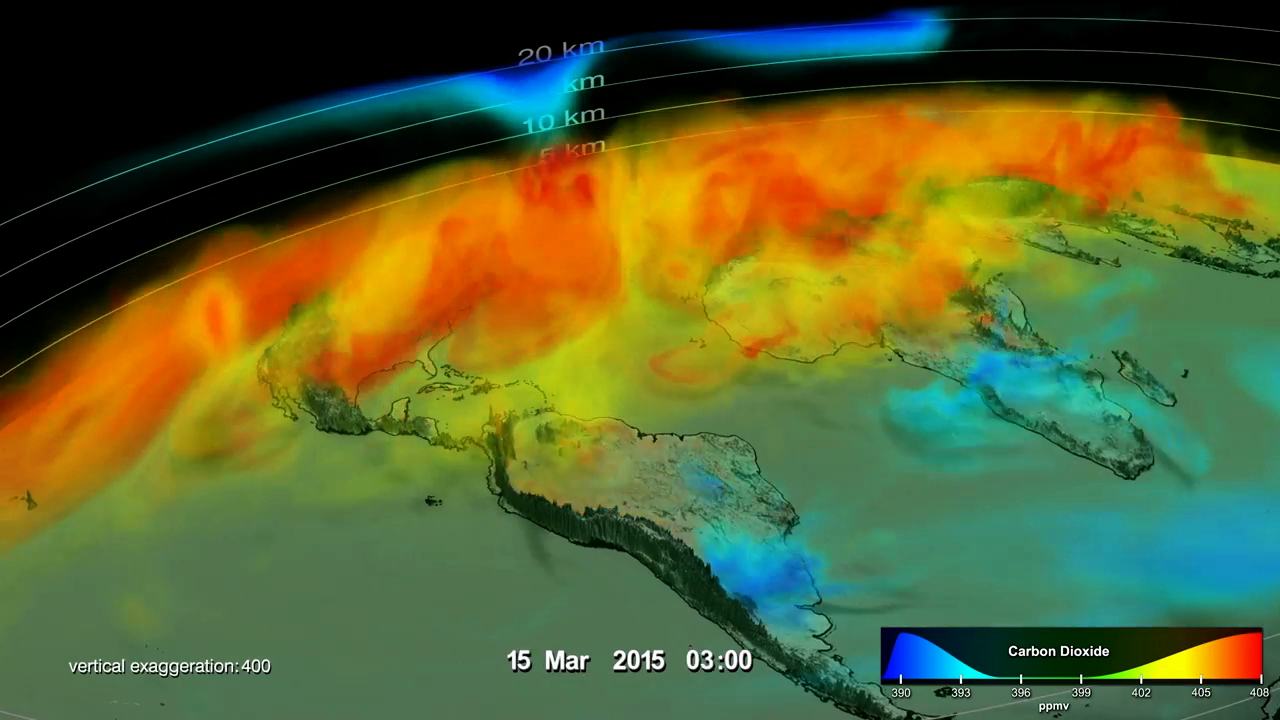
“Seasonal Changes in Carbon Dioxide” was the winning entry in the “Professional” category for a data visualization contest hosted by the journal Science.
The contest , open for entries from Feb. 13 to April 14 , accepted brusk videos no longer than 90 seconds in distance , attend for submission that used imaginative invigoration and storytelling methods to visually communicate stories crafted from scientific data . entry were judged on " creativity , complexity and clearness , " a contest illustration told Live Science in an e-mail . [ See television of the Data Visualization Winners ]
In the Student Entry class , the winner was " Wait … How Many People give out ? " by Kate Bredbenner , a doctoral prospect studying HIV in the Laboratory of Cellular Biophysics at Rockefeller University in New York . Bredbenner also bring about and stars in a YouTube serial publication calledSimpleBiologist , in which she draws on whiteboards to excuse scientific research . She used this technique for her contest accounting entry , which explored the challenge of comprehend the meaning behind great numbers , particularly when they represent death tolls .
" This video was made to provide visuals forbig number , which is something that I often have to do as a science communicator . It also shows the order of magnitude of the death price in early American history liken to today , " Bredbenner said in a financial statement .

Top prize for the Professional Entry class went to " Seasonal Changes in Carbon Dioxide , " submit by Gregory Shirah , a manufacturer of Earth - science - have-to doe with visualization for the Scientific Visualization Studio atNASAGoddard Space Flight Center .
In Shirah ’s video , a colorful 3D visualisation of atmospheric carbon dioxide show how the greenhouse gas pedal behaves in the Northern Hemisphere from season to time of year , and how the gas is influenced by exchange weather approach pattern and airflow over land features .
For the Corporate Entry category , the top prize was awarded to " Ecological Footprint of Countries : Deficit or Reserve ? " submit by Ronna Kelly , director of marketing and communications for Global Footprint internet , a research organization dedicated to mold sustainability practices around the world .

The video showcases visualizations created by the subject - data chopine Ecological Footprint Explorer and explore " use and availability of renewable instinctive resources for more than 200 countries and region , " according to the video ’s YouTube verbal description .
And the People ’s Choice award went to " Listening to Landscapes " by Sam Hooper , a doctorial candidate with the Kennedy Geospatial Lab at Oregon State University . Hooper turned to animated satellite information to illustrate the dynamic nature of Earth ’s surface as it gradually shifts over time .
" It ’s often difficult to call up of a landscape painting survive in any other form than how we shortly see it , " Hooper said in a statement .

" Landscapes , however , are constantly change , " he added .
All of the video submissions for the 2017 Data Stories contender are useable to look at on the Sciencewebsite .
Original article onLive Science .


